Showing posts with label Letters and Literacy. Show all posts

Monday, July 14, 2014

Get Started with the Alphabet!


This post is part of my at Home Pre-School Boot Camp.  For more information about the series, click here.

Assuming that you are working with the English alphabet, there are fifty-two characters that your child needs to know.  Twenty-six letters with upper and lower cases.  There really is no need to know exactly which ones she does and does not know, unless she knows them all.  The goal of this assessment is just to find three or so to target.  Once she has mastered those, look for a few more.

Quick side note.  Some of my friends who use the British system teach sounds ahead of letter names.  I did not choose this route, but if you want to use it,  just substitute the sound for the name in this exercise. Then you go back to names later.


Get Started!

Pull out your alphabet set.  Show one of the letters of your child's name to her.  Ask, "What letter is this?"  If she tells you, hand her the letter. If she can not tell you, tell her the name of the letter and put it aside.  Pick another letter from her name and repeat the process until you have three letters that she does not know. If you finish her name, continue with other letters.

Once you have three she did not know, choose one and show it to her again.  Wait quietly for at least fifteen seconds.  If she says it, give it to her with a word of praise.  If she does not say it, return it to your pile and say nothing.  Repeat with the other two.

Make a note of which letters you are going to target. Offer to read her a book of her choice or spend some time playing together.


 The post, Getting Started with the Alphabet, by Christy McGuire originally appeared on WisdomKnowledgeJoy@blogspot.com.

Monday, June 23, 2014

How Parents of Pre-schoolers get the most from their Free Public Libraries

If you live in the United States, it is almost guaranteed that you have a fantastic public library close by.  We have lived in towns and cities in six different states from Florida to Washington.  In every case, we were able access top rate children's programming and a unique selection of books that enriched our experience.


Here are some hints that will help you make the most of your local library.

1. Plan to get a library card if you do not have one. Typically you will need your drivers license (or identification) and proof of residency.  This information is usually available via a web-site, and some one will always be happy to help you via the phone.

2. Bring a bag to carry your books home.

3. Pick up a schedule of children's programs.  Occasionally this is available on the web, but I have found that the  most accurate information is usually found on a hard copy, even in the 2010's.  Ask if you don't see it, you will almost always get an enthusiastic response.

4.  Find the children's area, the juvenile non-fiction area, and where the alphabet books and math books are.  Pull one book from each area. Librarians live to help you find good books, so do ask them.  

5.  Sit down near the picture books and encourage your child to choose one.  Read it to her.  If she is interested, read her a second, third, whatever you have time for.  When it is time to go, let her choose two books to bring home.  Check out the ones you pulled, and hers.

You may want to skim the book quickly for appropriateness before reading.  Sometimes I close a book in the middle if I don't think it is healthy for our minds.  I think this sets an example of being aware of how our environment effects us. I also sometimes give more limited choices as to which books come home.

6. Check out all your selections, and make a note of the due date on your phone or in your planner.  

We will talk more about using books with your pre-schooler next week. 
If your kids are like mine, they will be excited about their finds. Enjoy!

Click here to see some of the great reads we have found at our local library.

This series is part of my At Home Pre-school Boot Camp. Click here to start at the beginning.

Click here to return to the Week 1 Summary Post.

The post Getting started at your library, by Christy McGuire, first appeared on WisdomKnowledgeJoy@blogspot.com.

Tuesday, April 1, 2014

Our own "Dumb Soldiers": Robert Louis Stevenson project

This activity can be used to address the following Next Generation Science Standards 
K-ESS2-1.Use and share observations of local weather conditions to describe patterns over time
K-ESS2-2.Construct an argument supported by evidence for how plants and animals (including humans) can change the environment to meet their needs.

April is poetry month, and we are doing a few simple poetry projects.  Poetry has always been one of my favorite subjects.

Last week, we read A Child's Garden of Verses by Robert Louis Stevenson.


We started by reading "The Dumb Soldier", a poem about a toy soldier left purposely in the yard so that he could report on the goings on there.   I pointed out how Stevenson chose words that paint a beautiful picture.  We went over a few terms that I expected to be tricky, like "dumb".  We talked about what was meant by "sea" of grass, and whether the soldier could actually see.

T-Rex and the Pony Artist created their own soldiers from our store of clean trash and a few other craft supplies. Before they started, we discussed what types of material would do well outside in the rain.


Here are the finished soldiers!


They found stations for their soldiers in the yard where they felt they would be safe.


All week we enjoyed more selections from A Child's Garden of Verses. T-Rex  and Pony Artist enjoyed their own yard and the spring weather.  On Friday, they were eager to bring in their soldiers and write their own tales.

Thank-you to Christy of Christy's House of Chaos for inspiring our poetry studies.  She wrote a fascinating post on Christina Rossetti  includes some great extension activities. You can check it out at http://housefulofchaos.com/christina-rossetti/.

Happy April Fools!  In honor of the holiday, I purposely included some misinformation in this post. Can you guess what it is?

Thursday, November 7, 2013

What will a five-year-old boy want to read?

I have read several articles recently that talk about how difficult it is to interest boys in reading, and gave elaborate suggestions on how to wet their appetite.  Now, there are no guarantees about what anybody else's boy wants to read, but this is what my five-year-old chose.  


Birds because he loves flying, and wants to understand everything possible about flying.  Comics...I don't know, but he loves them!  Although, I have decided to cut them up and just give him the ones I am willing to read and explain.

Tuesday, June 18, 2013

Library Treasures: I Columbus, My Journal


Today, I found in the children's section of our library, a copy of Christopher Columbus's journal of his first trip to the Americas.  Fortunately for my four-year-old and me, Robert H. Fuson translated Columbus's memoir into modern day English.  This book was edited by Peter and Connie Roop.  It is no surprise to learn that they are both accomplished teachers.

What does surprise me is that this work was never required reading for me.  It will not need to be required reading for my son.  We finished the whole thing this afternoon.  Several times, he urged me to keep reading.  When land was sighted, he literally jumped up and started clapping.  He was especially captivated by the illustrations, done by Peter E. Hanson.  At this point, he does understand that Columbus's venture was a key event in the history of what was to become our country, although he misses the philosophical shading of the memoir.  When he is ready to consider the more nuanced cultural and historical implications of the migration of Europeans to the Americas, this would be a perfect starting point.

Typically, I add the books I find in the library to my wish lists, but I  I, Columbus: My Journal went straight to my cart.  It is definitely a book I want to read, and to encourage my children to read again.


Thursday, May 30, 2013

Baking and Writing


I have been on the look out for activities that would allow us to incorporate a little bit of letter writing and reading.  As my little girl and I were making some banana bread this afternoon, I realized we had the perfect opportunity.  Using my finger I wrote her name in the pan I was buttering.  We followed with her brother's name, then did a simple "sound it out" word (sun), and then the more complicated word "Daddy", which uses the "y" that says "ee".


She was so amused that she decided that she wanted to write in the flour on the cookie sheet as we were ready to add it to the pans.  This picture from my post about sugar cookies explains how we came to have flour on the cookie sheet.


Do you have any fun every day ways to practice letter formation and reading words?

Friday, April 26, 2013

Library Treasure: Go Bugs Go!


This week's treasure was my son's find.  The scenes in Go Bugs Go! Jessica Spanyol are  attractive to kids.  Apparently the her son helped develop some of the characters and scenarios.  It features of physical action and intriguing little details.  There are also some nice repetitions of phonetically simple words  The result was that my children each sat and "read" this book to themselves many times.  I suspect we may see this one again.

Have you found a great book at the library recently?  Please share!


Linked to: Mum's Make Lists, Reading Link-up

Friday, March 29, 2013

Library Treasures: Camping Day


This was our first week at the library in our new town.  Happily, this town lets you pay for a library card if you cannot qualify by presenting your address.  

This was also my four-year-old son's first time to visit the library in a few months, since my daughter and I have been going while he was at preschool.  He was happy to be there, and this book was his pick.  It has camping and dinosaurs in one book!  Yes, those are alligators, but dinosaurs make an appearance.  He thinks the story is hilarious.

I have to say, I like it too.  This is a great early reader book with lots of simple words and repetition.  Much of the print is large, which makes it easy to ask my children to fill in the sight words they recognize as we read.    Usually, my son is bored by the content in early reader books, but I have observed him "reading" this one to himself and to his sister more than once.  

Do you have a library treasure to share?  Please leave it in the comments!


Previous Library Treasures: The Read Aloud Handbook by Jim Trelease
                                             Franklin is Messy
Linked to: 


Thursday, March 21, 2013

Montessori Writing Method: Homemade Tracing Cards

 I am working toward providing a Montessori system of learning to write for my kids, ages three and four.  The three-year-old is wordy and the four-year-old is hands on, so Montessori's system a great fit for both of them now.


Montessori advocates that rather than asking a child to simultaneously remember what the characters represent, how to hold a pencil, and how they are formed, the child should be allowed to separate these tasks.   My husband found the ABC slate app,and it has been a hit.  The portability and the draw of "screen time" make it a fantastic tool. However, I thought that we should have a tactile option in addition.   Montessori talks about wooden blocks with sand paper letters.That seemed like a pretty daunting project, so I stepped things down a little. 

My materials are index cards, yarn, and glue.


1.  Roughly estimate the amount of yarn to make the figure.
2.  Glue on the straight parts.
3.  Glue down the rest, and clip of the excess.


My three-year-old has tried these out a couple of times, and has been very interested in learning to make the letters correctly.  She concentrates really hard, and it is obvious that it truly is an accomplishment every time she makes a figure correctly.


Monday, March 18, 2013

Montessori Writing Method: Magnetic Letters


During my most recent re-read of Maria Montessori's The Montessori Method. I realized that her system of teaching a child to write would be a perfect fit for my kids now.  They have  both mastered letter sounds and letter names.  It is fascinating to see that they are developing very differently from this point, which is one more reason to use Montessori's methods.

  Montessori breaks down the process of writing into three parts: proficiency in using a pencil, knowing how to form the shapes, and forming words.  In her book she describes using wooden letters to form the words.  I think she would be ok with using plastic alphabet letters instead.  
I found these letters on Amazon.


Lesson Plan


Montessori directs the teacher to give the child the set of letters.  She is then to pronounce the word clearly, asking the child to choose the letter that corresponds with the sound he hears.  Once he has spelled out the word, the child is then asked to read the word he just wrote.  It surprises me how difficult it is for my children to read the word they've just written.


 So far my daughter, three, enjoys writing names.  My son, four, wants to jump right into some rough sentences as you can see above.  He also wants to write complex words, not just beginner words.  According to Montessori, this process of forming words precedes reading, but continues to help the student perfect spelling skills as long as needed. I'm intrigued to see how their writing progresses.

Have you tried a similar activity?  What were the results?

Related Posts:  Travel friendly storage for magnetic alphabet letters

Montessori Writing Method: Homemade Tracing Cards

Montessori Writing Method:Pencil Practice


Linked to Blog Hop at Monday Kid Corner:  


Wednesday, March 13, 2013

Travel friendly storage for magnetic alphabet letters.

My brilliant husband gets credit for this idea.  I told him what I was trying to do, and he made it happen.  This lovely storage box came from Grangier.   It isn't the cheapest possible option, but I like it because the letters fit easily,  the clasps fasten the lid securely, and it has a handle.   If you're looking for a cheaper option, check a craft supply store for a bead storage container.   If you want seriously cheap, an egg carton will work.  The main goal is to put each letter in its own compartment so that it can be found easily.


Before we put the letters in, I followed Montessori's direction and wrote the name of each letter on the section where it goes.  Clean up time is not the time to tax tired little brains!


We put capital and lower case letters in the same compartment. There's plenty of space, and so far my kids don't seem confused.  If one of them was struggling, I'd make a point to store capital and lower case letterers separately.

I'm looking forward to pulling this out many, many times in the coming years.

Monday, March 11, 2013

Library Treasures: Franklin is Messy


Every week I have this urge to write about one, or even more, of the great books we find at the local library. Starting this week, I'm going to unleash my inner bookworm and follow the urge.  I will try to just pick one book.  The rest are going on my Amazon wish lists, because it annoys me to no end to be unable to find that "great book we read once."

This week we found Franklin is Messy by Paulette Bourgeos and illustrated by Brenda Clark.  My three-year-old has been crazy about Franklin ever since the Chik-fil-a promotional a few months ago.  I dutifully pulled a few titles today.

As we read through this book tonight, at the request of my four-year-old, I became excited.  We have been trying to instill the value of neatness, which is the theme of the book.  I could feel my son sympathizing with Franklin's struggles.  At the end I asked, "Why did Franklin lose his things?"  He does not know tonight, but I think maybe by the end of the week he will.

This is also going to be a great opportunity to work on Core Standard RL K.1. With prompting and support, as and answer questions about key details in a text.

Have you found a treasure at the library recently?  Please share in the comments!

Wednesday, March 6, 2013

Virtual Book Club, Julia Donaldson's A Squash and a Squeeze


Julia Donaldson was a new author for us.  The book that we found was a delightful little story called A Squash and a Squeeze.  My daughter was fascinated by the story immediately.    It has rhythm, rhyme, and some simple counting. 

Thursday, February 21, 2013

Learning with Playdough

Play dough is an amazing substance.  My kids will play with play dough for hours.  

When we lived in Kuwait, making play dough was by far easier than trying to find it.  A good friend asked me to "try out" a recipe for a church group, and I am grateful for the nudge in the right direction.

Homemade play dough recipe


This recipe comes from CEF:  1 part corn starch, 2 parts baking soda, 1.5 parts water.  (i.e. 1 cup cornstarch, 2 cups baking soda, 1.5 cups water)

1.Mix everything in a sauce pan.
2. Cook and stir on medium low heat, until all at once it comes together and forms into a ball.
3. Cool.
4. Knead in a little extra cornstarch as you go.

I have to admit I was scared to try it, but it turned out brilliantly!  Of course, you can always buy the commercial version.

What do we do in those happy hours?


 Make stuff. 


I've noticed that my kids are interested in making stuff longer if I engage in a little parallel play making stuff too.  This took a little effort at first.  After a while, it became a relaxing opportunity to try something new.  The picture above is my attempt to mimic pottery done by the Cherokee.  Not the work of a master, but it was fun.


Use tools.


When I see that just making stuff is getting a little boring, I like to introduce stuff: the random piece of plastic my son is using above, butter knife, rolling pin, tooth picks, slotted spoon. Of course, sometimes my son starts pulling out tools as soon as we pull out the play dough.

Practice math skills.


My kids love asking me to make tiny balls, which could also be called spheres.  Sometimes we make cubes and build structures.  Sometimes I ask for a particular number of pieces of play dough.  My daughter can count to six pretty easily right now, so I ask for four first.  Then I ask for seven, then five and so on.


Write.


When we were learning the alphabet I made letters and asked for their names.  Then I asked for the sounds that they make.  Now I make simple words and coach my kids to sound them out.  You could do the same with numerals.


Of course, all this time we're strengthening the muscles needed for fine motor skills.  

Using just one activity I cover all my objectives for the day.  Even better, I connect with my children in a way we all enjoy.


Thursday, February 14, 2013

Two Books For Black History Month

February is Black History Month.  Here are two books we've enjoyed recently that would be great for a Black History theme.


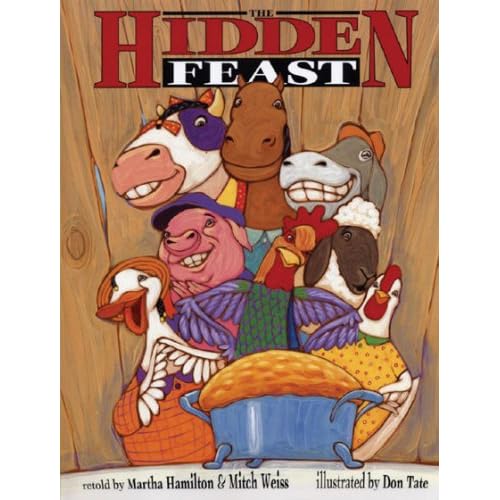
The Hidden Feast  is a traditional Black American folk tale about barnyard animals.  The morale of the tale is persistence, although it also teaches gratitude.


Head, Body, Legs  comes from Liberia.  Reminiscent of the Biblical parable about the eye needing ear, body parts meet up in an African forest and learn to work together.


Tuesday, January 22, 2013

Friday, January 11, 2013

Jamaican Time Rhyme


When Johnny was one, he learn to suck he thumb,
Thumb Tilda, thumb Tilda, half past one.

When Johnny was two, he learn to clean he shoe,
Shoes Tilda, shoes Tilda, half past two.

When Johnny was three, he learn to climb mango tree,
Tree Tilda, tree Tilda, half past three.

When Johnny was four, he learn to shut de door,
Door Tilda, door Tilda, half past four.

When Johnny was five, he learn to dig an' dive,
Dive Tilda, dive Tilda, half past five,

When Johnny was six, he learn to pick up sticks,
Sticks Tilda, sticks Tilda, half past six.

When Johnny was seven, he fly up to heaven,
Heaven Tilda, heaven Tilda, half past seven.

When Johnny was eight, he learn to shut de gate,
Gate Tilda, gate Tilda, half past eight.

When Johnny was nine, he learn to feed de swine,
Swine Tilda, swine Tilda, half past nine.

When Johnny was ten, he learn to feed de hen, 
Hen Tilda, hen Tilda half past ten.

Jamaica

This mesmerizing little piece comes from A Caribean Counting Book by Faustin Charles and Robertan Arenson.  We've done it two ways, and enjoyed them both thoroughly.

Simple Counting


When we first came accross this poem, my two-year-old daughter was just learning the basics of counting.  As I read the rhyme, I illustrated it by holding up my fingers, starting with my thumb, and dancing them in the are to the rhythm of the syllables.  She was soon holding up her little fingers, connecting the number names with the concepts they represent through tactile means.

The inability to do math without fingers is sometimes lamented in older elementary children.  However, as a former physics teacher, I'm much more disturbed by high school students who cannnot do math on their fingers.  There's nothing wrong with counting on your fingers until you're proficient enough that it's inefficient anyway.  Well, that's my opinion.

Telling time


My four-year-old son was already fairly comfortable with counting.   I try to make a point of having a an old fashioned clock with hands in the house when I can, and he had become interested in the clock on our wall six months or so before.  I taught him that when the longer hand was on the twelve he could look at the shorter hand to tell "the o'clock".  He'd watch the clock, just waiting for a chance to tell us what time it was with accuarcy.

This rhyme presented the perfect opportunity to add to his time-telling prowess.  I pulled out our trusty Melissa and Doug clock puzzle. We reviewed how to know when it was an "o'clock time, reviewing an establised skill before moving to the new one.  Then I moved the long hand to the six, and announced that this was the half-past position.  I then asked him to place the small hand on the one.  As we progressed through the poem, he eagerly moved the hour hand around the face of the clock.


Rhyming


As I read through the rhyme, I stop before the number allowing my children to fill in the number that rhymes with the preceding rhyme.  "Shoes Tilda, shoes Tilda, half past ____."  They enjoy filling in the "two" that rhymes with shoe, and sharpen the phonological awareness that reading experts say is so important.

The rhyme ends with ten, but the clock does not.  My son agrees with the clock, so we keep going and my children to generate the needed tasks for Johnny that rhyme with eleven and twelve.  

I hope you enjoy as much as we do!


Saturday, January 5, 2013

Thursday, December 27, 2012

Jamaican Centipede Rhyme


My kids and I enjoyed the book so much the first couple of times through, that I thought we could get more use out of some of the rhymes.  To help  us get the most out each rhyme, I started making up visuals.  

Monday, October 22, 2012

School Sparks Worksheets

One day I was seraching for a quick activity to entertain my three-year-old, and I happened into the gold mine that is SchoolSparks.com.  On this site retired pre-school teacher, Renee Abramovitz shares insights that she's gained in an entire career of teaching little ones.  She gives a thorough explanation of the knowledge and skills that constitute kindergarten readiness.  As a former secondary teacher turned current mom of pre-schoolers, I was thrilled to have this information outlined so clearly.

  In addition, she provides worksheets for free!  Both of my kids (ages 2 and 4 now) will sit and do work sheet after worksheet.  The only draw back is that printing the lovely color sheets can get pricey.  My brilliant husband, seeing how much the kids were enjoying the worksheets,  suggested that we laminate the sheets so that could they could be done with dry-earase marker or grease pencil, then used again another day.  I was all set to go to the office store to print out a number of worksheets when, Mrs. Abramovitz  put out her new book, 461 worksheets for only $28, and tons of advice for parents along the way.  It's fantastic deal.  I ordered our copy almost immediately and picked up a personal laminater from Wal-mart.  The laminator was the pricey part of the project, but I definitely think the expenditure was worth it.  The evening we laminated, the kids were grabbing the sheets out of the machine.

Here's how we've used School Sparks book of worksheets so far.


 Fine Motor and Counting.


  I knew we wanted to work on writing/fine motor, so I pulled out all the fine motor worksheets, and we laminated them.   My four-year-old will do all the fine motor practice pages in one sitting, and sometimes repeat several before he begins to lose interest.  My two-year-old will do the first three or four.  I love that they can practice over and over, and they think they're just having fun. We also did the counting counting sheets.  My two-year-old works on the first page, while my four year-old works on the more advanced pages.  We only pull these out every few weeks, so it's an exciting new way to count every time.

Reading Skills. 

 The worksheets are printed on good sturdy paper.  However, not even card board would stand up to my little boy's strong hands.  So, we laminated the reading tools as well.  We just started the Dolch sight words, following Mrs. Abramovitz's method, and so far he's doing well.  We also played around with the word makers, and I can tell we'll enjoy those as well. 

I had never realized that rhyming was an important pre-reading step.  We pulled out the rhyming cards this weekend, and there was alot of complaining about putting them away.  We're having a little trouble with it though, so I want to get some books from the library to supplement before we try again.


A nice little side feature of the word makers.  The pictures on the card match the pictures on the strip.  This is a great pre-school organizer, and actually serves as an activity in itself for my toddler.


And there's more!  

Here is our book minus all the hours' worth of materials above. Since some of the worksheets work just as well as parent-child activities, I'm leaving them in the book for now.  The worksheets are graded, meaning you should start with the first, and work progressively in order.  I put an index card with each child's name in each section of the book to mark our place.  Every so often, we'll sit down and work through a page or two.  I find that using the worksheets in this way not only provides instruction for my child, but it's a handy assessment tool to help me know what areas I should be addressing at other times.


Thank you, Thank you! to Renee Abramovitz and her team for providing such a wonderful resource at such a low cost.  As a mother of pre-school children, I will always be grateful.